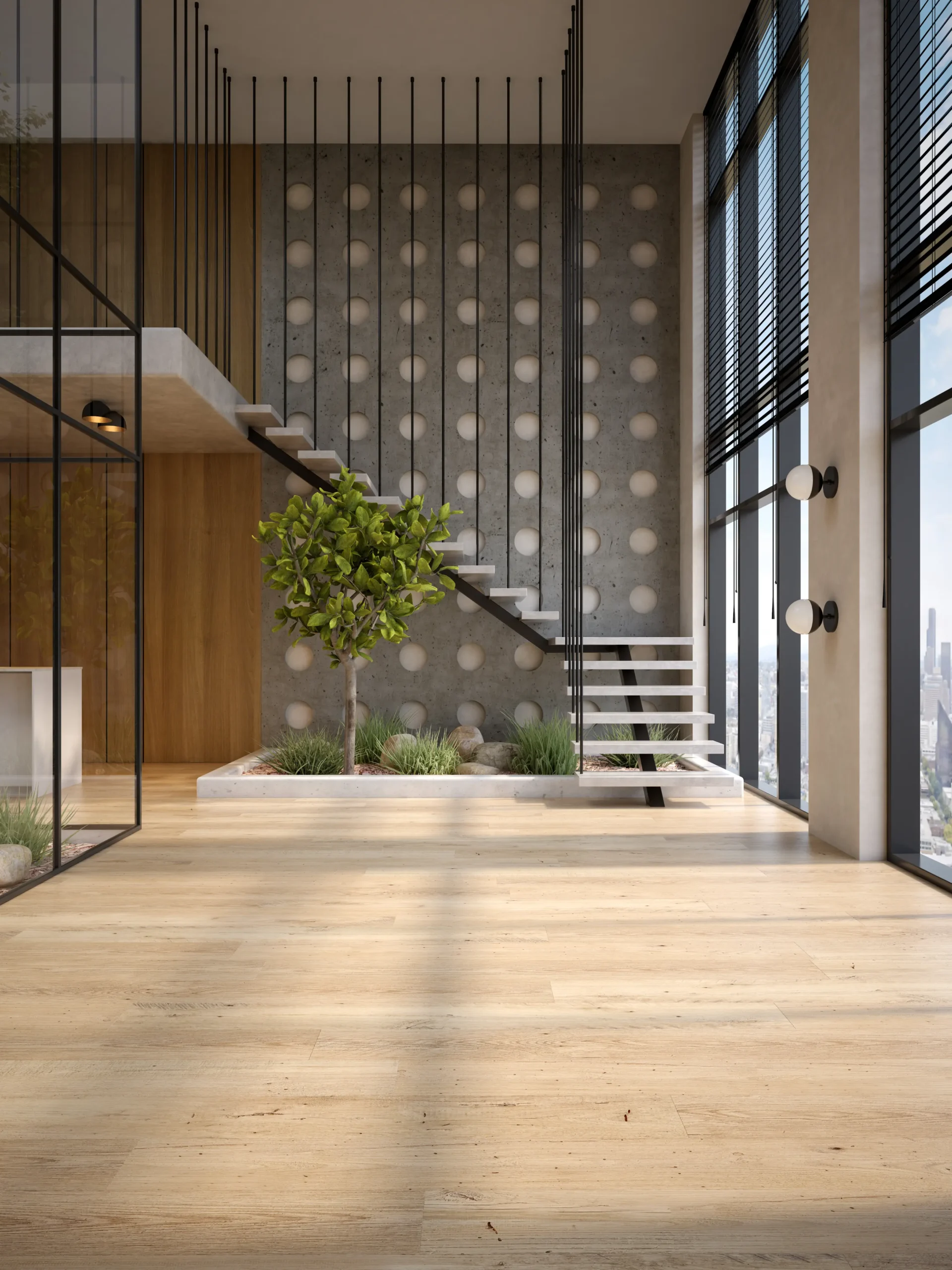

A LOOK AT HOW VINYL IS MANUFACTURED.
The Vinyl Flooring Manufacturing Process
Raw Materials
Vinyl flooring is primarily made from polyvinyl chloride (PVC). The process begins with the extraction and refinement of PVC, which is then combined with various additives to enhance flexibility, durability, and color.Creating the Base Layer
The base layer, or the backing layer, provides stability and support to the vinyl flooring. This layer is typically made from fiberglass or a similar material that offers dimensional stability. It ensures that the flooring maintains its shape and resists expansion or contraction due to temperature changes.Adding the Print Layer
The print layer is where the visual design of the vinyl flooring is applied. This layer can mimic the look of natural materials such as hardwood flooring, stone, or ceramic tile. The design is printed using high-resolution digital recording technology, ensuring precise and realistic patterns.Applying the Wear Layer
The wear layer is a critical component of vinyl flooring, providing protection against scratches, stains, and general wear and tear. This layer is made from a clear, durable material such as polyurethane, which is sprayed or coated onto the print layer. The thickness of the wear layer can vary, with thicker layers offering better durability.
Specialized Techniques in Vinyl Flooring Production
Vinyl Plank Flooring
Vinyl plank flooring is designed to resemble hardwood planks. The manufacturing process involves cutting the vinyl into long, narrow strips that mimic the appearance of wood planks. These planks are then treated with additional coatings to enhance their texture and durability.
Luxury Vinyl Tile
Luxury vinyl tile (LVT) offers the look of natural stone or ceramic tile but with added benefits of vinyl. LVT is made by cutting vinyl into square or rectangular tiles and applying a textured surface that replicates the feel of natural materials. This type of vinyl flooring is known for its high-end appearance and superior performance.
Sheet Vinyl
Sheet vinyl is produced in large rolls and is ideal for areas requiring a seamless and water-resistant surface. The sheet is created by layering PVC and other materials, then heating and pressing them to form a continuous sheet. This type of vinyl flooring is particularly suitable for kitchens, bathrooms, and other moisture-prone areas.
Final Steps in Vinyl Flooring Production
Curing and Finishing
After the wear layer is applied, the vinyl flooring undergoes a curing process. This involves heating the material to harden the coatings and ensure durability. The final step includes adding any additional finishes, such as embossing to create texture or a high-gloss top coat for shine.
Quality Control
Each batch of vinyl flooring is subjected to rigorous quality control tests. These tests check for color consistency, thickness, durability, and overall appearance. Any defects are identified and rectified before the product is packaged.
Packaging
Once the vinyl flooring passes quality control, it is packaged for shipment. Vinyl planks and tiles are typically shrink-wrapped to protect them during transportation, while sheet vinyl is rolled and secured.
Understanding Vinyl Record Pressing
Interestingly, the production of vinyl flooring shares some similarities with the manufacturing of vinyl records. Both processes involve pressing materials into specific shapes and applying protective layers. Here’s a brief look at how vinyl records are made, highlighting the parallels:
- Master Disc Creation: The process starts with creating a master disc, which captures the audio recording.
- Metal Mastering: The master disc is sprayed with silver and then subjected to a nickel bath to create a metal master, also known as a stamper.
- Record Pressing: Vinyl records are pressed using the stamper, much like how vinyl flooring is pressed into planks or tiles.
- Test Pressings and Quality Control: Test pressings are made to ensure the quality of the recording, similar to the quality control checks in vinyl flooring production.
- Packaging: Finished records are packaged in shrink wrap, just as vinyl flooring products are prepared for shipment.
Benefits of Vinyl Flooring
Vinyl flooring offers numerous advantages, making it a popular choice for many homeowners:
- 100% Waterproofing: Ideal for moisture-prone areas like bathrooms and kitchens.
- Durability: Resistant to scratches, stains, and wear, perfect for high-traffic areas.
- Easy Maintenance: Simple to clean and maintain, saving you time and effort.
- Affordability: Cost-effective compared to natural materials like hardwood or ceramic tile.
- Versatility: Available in a wide range of styles, colors, and textures to match any décor.
Choosing the Right Vinyl Flooring
When selecting vinyl flooring for your home, consider factors such as room usage, desired style, and budget. Vinyl plank flooring is excellent for mimicking the look of hardwood, while luxury vinyl tile offers a sophisticated alternative to natural stone or ceramic tile. Sheet vinyl provides a seamless and water-resistant option, ideal for high-moisture areas.
Understanding how vinyl flooring is made can help you appreciate the craftsmanship and technology involved in producing this versatile and durable flooring option. At Grand Floors & More in Katy, TX, we offer a wide selection of high-quality vinyl flooring products to suit your needs. Visit our vinyl flooring store to explore our range and receive expert advice on choosing the perfect flooring for your home. With our help, you can enjoy beautiful, easy-to-maintain, and long-lasting vinyl flooring in every room of your house.
Write Message
Our Location
Our Location
South Suite 140 Katy, TX 77494
Call Us Today
Store Hours
Fri: 10 AM-1 PM & 2:30 - 6 PM
Sat: 10 AM- 5:30 PM
Sun: 12 PM - 4 PM